Financial Infrastructure
The Ledger Is the Product
Why a correct, auditable double-entry ledger is the component most financial products underestimate — and the hardest one to retrofit.
jStack Engineering · June 11, 2026 · 7 min read
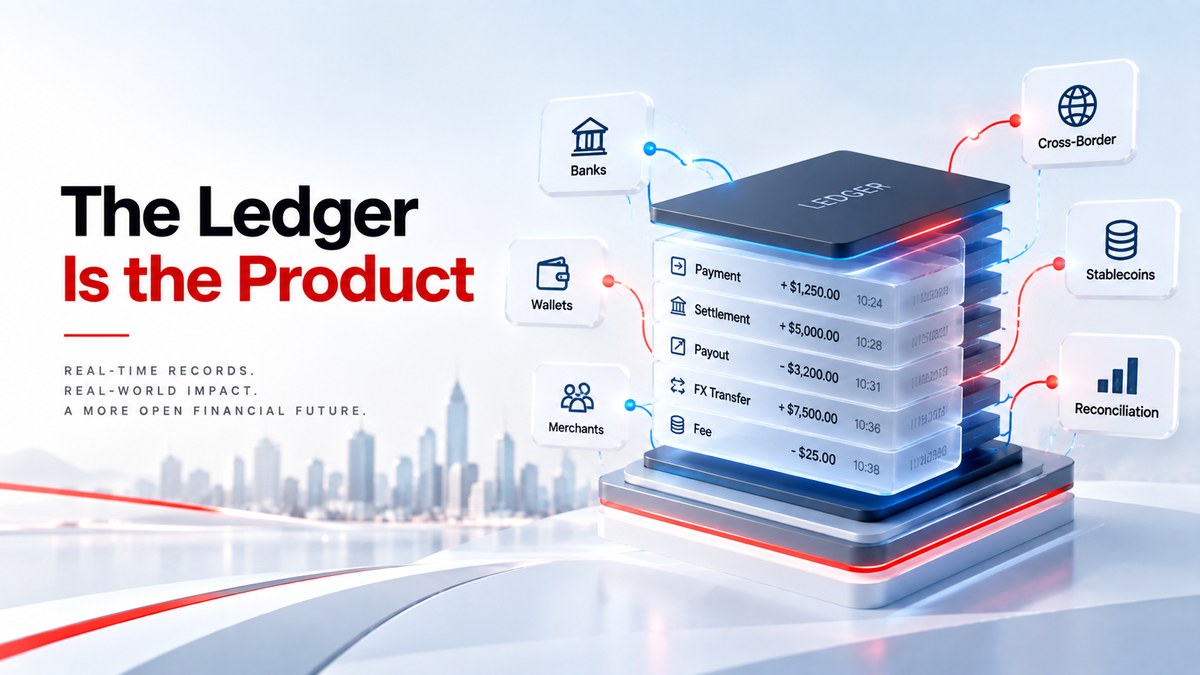
Teams often treat the ledger as bookkeeping that follows the product. In financial infrastructure it is the product, and everything else is an interface onto it.
Why this matters
Ledger design is no longer a back-office concern. As financial products move closer to the customer, the infrastructure underneath them determines how quickly teams can launch, how reliably money settles and how much operational load an organization carries.
- Balances should be derived, never stored as the only truth.
- Every movement needs an immutable, reconstructable entry.
- Multi-currency and multi-rail support belongs in the model from day one.
What changes in practice
Modular infrastructure lets teams adopt what they need without rewriting the rest of the stack. Wallets, ledgers, payment orchestration and settlement can be introduced independently, then connected through a single consistent transaction model.
Where to start
- 01Define the transaction model and the money movement flows you must support.
- 02Separate the ledger from provider integrations so rails can be added later.
- 03Instrument reconciliation and settlement from day one, not after launch.
- 04Plan for multi-country requirements before the first market goes live.